How to Test for Heavy Metals in UGL Steroids and Peptides

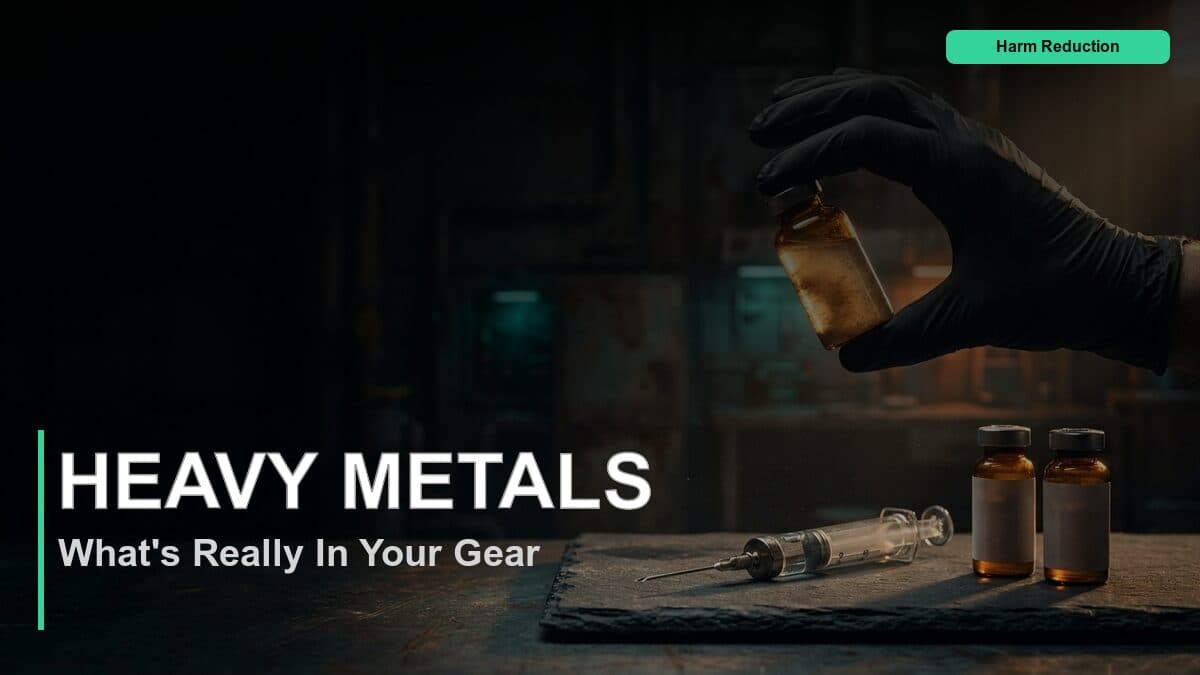
You vet your gear for a lot of things. Purity, dosing accuracy, whether the label matches what is in the vial. Heavy metals rarely make the list, because you cannot see them, you cannot feel them at first, and no forum bro is going to warn you about lead the way they warn you about a crashed batch. Then a peer-reviewed lab put 28 underground-lab steroid products through a mass spectrometer, and the results were not reassuring.
This article covers what actually turns up in contaminated gear and grey-market peptides, what lead, cadmium, arsenic, and mercury do to organs you are already taxing, and the part nobody else connects: exactly which blood tests to order, how to read the numbers, and what to do about a result. No fear-mongering, no detox-tea nonsense. Just harm reduction for people who are going to use regardless.
This is educational harm-reduction content, not medical advice. Anabolic steroids and research peptides carry real risks, and many are illegal to possess without a prescription. If you suspect heavy metal exposure or organ damage, see a doctor or a medical toxicologist. Nothing here replaces professional testing and care.
Quick answer: A 2025 forensic analysis found heavy metals, including lead, arsenic, and cadmium, across every injectable and oral underground-lab steroid it tested, and more than half the products were mislabelled. Single doses sat inside regulatory limits, but those limits assume occasional use, not years of weekly injections. If you want to check your own exposure, order a blood lead level plus a 24-hour urine panel for cadmium and arsenic, and pair them with kidney markers (cystatin C, eGFR, urine albumin) because lead and cadmium are nephrotoxic. The CDC blood lead reference value for adults is 3.5 µg/dL. If a metal is high, the fix is removing the source, not a chelation kit off the internet. Full breakdown below.
What the labs actually found in underground-lab gear
In 2025, researchers in Australia bought 28 anabolic steroid products the way a normal user would, online and through gym contacts, and sent them to an independent forensic lab. The samples covered 16 injectable oils, 10 oral tablets, and 2 raw powders, tested by GC-MS, LC-MS, and ICP-OES (Craven et al., 2025).
They detected 12 different heavy metals across the injectable and oral samples. Not a worrying minority, all of them. Injectables averaged lead around 1.57 µg/mL, with arsenic and cadmium also present. Orals averaged lead near 1.94 µg/g and arsenic around 2.35 µg/g. The authors were careful to note that any single dose stayed within the single-exposure safety limits set by regulators. That sounds comforting until you remember those limits assume a one-off exposure, not the same person pinning the same supplier twice a week for years. Cumulative dosing is the entire problem, and it is exactly the pattern enhanced athletes follow.
There was a second finding that matters just as much. Fifteen of the 28 products, 54%, were mislabelled or mis-sold. One vial labelled testosterone enanthate at 200 mg/mL actually held about 159 mg/mL of trenbolone with no detectable testosterone. Two "oxymetholone" tablets were a completely different compound. So you cannot even assume the contamination risk tracks with what is on the label, because the label is frequently fiction.
Where the metals come from
Legitimate injectable drugs go through formal elemental-impurity testing under standards like ICH Q3D and USP chapters 232 and 233. Every component, including the carrier oil and solvents, gets screened. Underground labs skip that layer entirely. Raw hormone powders are usually sourced from unregulated chemical suppliers, and the study's own lead author has pointed to poor quality control and impure starting materials as the entry point, with metals introduced during synthesis, handling, equipment contact, or contaminated solvents.
This is not unique to steroids. The same "no testing at any step" pattern shows up in other illicit supply chains: analyses of black-market opioids found lead up to 138 µg/g alongside heavy bacterial contamination (Aghababaei et al., 2018), and counterfeit cigarettes carried roughly 9 times the lead and 5 times the cadmium of genuine ones (He et al., 2015). The root cause is the absence of regulation, not anything specific to gear.
Oils and lyophilised peptides get contaminated differently
An injectable oil and a peptide vial are not the same product, so the contamination enters at different points. For oil-based steroids, the suspects are the raw powder, the carrier oil, and the solvents like benzyl alcohol and benzyl benzoate. For a lyophilised peptide, you have the powder synthesis itself, which uses metal catalysts and resins that leave residue if not purified, plus a second contamination vector that oils do not have: the bacteriostatic water you reconstitute with, and the non-sterile handling around filling and capping. Peptides are injected, so endotoxin and bacterial contamination ride along with any metal problem.
What lead, cadmium, arsenic, and mercury do to your body
The reason this matters for you specifically is that these four metals attack the exact organs your protocol is already stressing.
Lead
Lead goes after the nervous system, the cardiovascular system, the kidneys, and the hormonal axis, and it does damage well below the old "occupational" thresholds. A meta-analysis of over 58,000 people found that a doubling of blood lead tracked with about a 1 mmHg rise in systolic blood pressure (Nawrot et al., 2002). One mmHg sounds trivial, but it stacks directly on top of the blood pressure load you may already carry from AAS. A 16-year Swedish cohort found higher blood lead predicted faster kidney decline and a 49% higher risk of chronic kidney disease (Harari et al., 2018). And in men with no occupational exposure, low-level lead was linked to worse semen parameters and altered testosterone, estradiol, and prolactin (Telisman et al., 2007), which is a genuinely awkward wrinkle if you are trying to read a hormone panel on cycle. Early symptoms are vague: fatigue, irritability, trouble concentrating, headaches.
Cadmium
Cadmium is the quiet one. It concentrates in the kidney with a biological half-life measured in decades, so the damage is cumulative and largely permanent even after exposure stops. A 2024 analysis of nearly 25,000 adults found that even "elevated" blood cadmium at or above 0.4 µg/L independently raised the odds of chronic kidney disease, and combined lead plus cadmium raised it further (Kuo et al., 2024). It also pulls calcium out of bone over time. There are usually no symptoms until tubular kidney damage is already established, which is exactly why screening beats waiting for a warning sign. Smoking is the single biggest non-occupational cadmium source, so if you smoke, that stacks on top of anything in your gear.
Arsenic
Arsenic is where testing gets tricky, because the form matters enormously. Inorganic arsenic, the kind found in product contamination, is a confirmed human carcinogen, and it raises cardiovascular risk: in a study of hypertensive men, the highest arsenic exposures tracked with a 24% higher predicted 10-year cardiovascular risk (Nong et al., 2016). Organic arsenic, the kind in fish and shellfish, is essentially harmless and passes straight through you. The catch is that a standard total-arsenic test cannot tell them apart, so a big seafood meal can spike your result into scary territory without any real toxic exposure.
Mercury
Mercury's main target is the nervous system, and the relevant form here is methylmercury from predatory fish: tuna, swordfish, shark. That makes diet a massive confounder for anyone eating 300 to 500 grams of fish a day for protein. Chronic low-level exposure has been associated with subtle effects on memory and fine motor control, though the evidence on cardiovascular risk is inconsistent (Karagas et al., 2012).
Before you panic over an arsenic or mercury result, account for diet. Organic arsenic from seafood and methylmercury from big predatory fish can both inflate a blood or urine reading without meaning your gear is dirty. Avoid seafood for 48 to 72 hours before an arsenic test, and if a result is high, ask for speciation testing that separates the toxic inorganic form from the harmless organic one.
Enjoying this article?
Get evidence-based bloodwork guides delivered to your inbox every two weeks. No spam, unsubscribe anytime.
Which blood tests actually catch heavy metal exposure
This is the part most coverage skips. The journalism tells you contamination exists, the medical sites tell you about chelation, but almost nobody tells an enhanced athlete which test to order and how to read it. So:
Different metals need different samples, because "recent exposure" and "total body burden" are different questions.
| Metal | Best test | What it tells you | Prep |
|---|---|---|---|
| Lead | Blood lead level | Recent and ongoing exposure | None |
| Cadmium | 24-hour urine (creatinine-corrected) | Cumulative kidney burden | None |
| Arsenic | 24-hour urine, with speciation | Recent exposure | No seafood 48 to 72h |
| Mercury | Whole blood mercury | Recent exposure | Note fish intake |
Blood is best for lead and mercury. Urine is the gold standard for cadmium and arsenic. Hair testing looks appealing but is prone to external contamination and has no standardised method, so treat it as a curiosity, not a diagnosis.
The organ markers that matter more than the metals
A metal panel is a snapshot. The more useful long-term signal is whether your organs are actually taking damage, and that is where the markers you already track come in. Because lead and cadmium are nephrotoxic, pair any metal test with a proper kidney panel: creatinine, eGFR, cystatin C, urine albumin, and the BUN to creatinine ratio. On the liver side, keep an eye on ALT, AST, and bilirubin.
Why cystatin C, not just creatinine: If you carry a lot of muscle, your creatinine runs high for reasons that have nothing to do with your kidneys, which can hide real damage. A 2023 study compared bodybuilders on AAS against natural bodybuilders and found creatinine-based eGFR was basically identical between the groups, while cystatin-C-based eGFR was significantly worse in the AAS users, along with higher urine albumin (Ozkurt et al., 2023). Cystatin C is made at a steady rate by all your cells and does not care about muscle mass, so it catches the decline your creatinine hides. If you are exposed to nephrotoxic metals, this is the marker that tells you the truth. See the full breakdown in Cystatin C and kidney health for bodybuilders.
What if your blood lead comes back at 8 µg/dL?
Say you test and your blood lead is 8 µg/dL. Is that a crisis? No. Is it nothing? Also no. This is where people get it wrong, because they treat "elevated" as a single binary line.
The CDC reference value for adults is 3.5 µg/dL, set at the 97.5th percentile of the population, and the average US adult sits below 1 µg/dL (Ruckart et al., 2021). So 8 µg/dL is more than double the reference and many times the population average, but it is nowhere near the levels that call for urgent medical treatment. Adult clinical guidance puts a result in the 3.5 to 9 µg/dL band into a clear plan: find and remove the source, then retest roughly every three months until you are back under 3.5. The uncomfortable part is that chronic sub-10 exposure is precisely the range associated with higher blood pressure and faster kidney decline in the studies above. "Not an emergency" is not the same as "ignore it."
For an enhanced athlete, the most likely source of a result like that is not your tap water or an old house. It is poorly refined oil or powder from a UGL supplier, which loops straight back to sourcing.
Should you order a heavy metal panel? A quick decision tree
You do not need to run a metal panel every blood draw. Use a simple triage:
- Have symptoms with no better explanation? Persistent fatigue, new hypertension, cognitive fog, GI issues, or rising creatinine or albumin that your usual suspects do not explain. Test.
- Know or suspect a bad batch? A supplier switch, a product that looked or smelled off, or gear that came back mislabelled or underdosed on a test. Test, and stop using that source.
- Years deep on UGL gear with no baseline? Long-term, high-frequency use from grey-market sources and you have never checked. Get one baseline blood lead plus urine cadmium and arsenic to know where you stand.
- New to this and sourcing pharmacy-grade or tested product? Your prior risk is low. Prioritise your standard kidney and liver monitoring, and skip the metal panel unless something changes.
Order unprovoked tests, meaning a normal blood or urine sample with no chelating agent given first. That distinction matters, and the chelation section below explains why.
Do grey-market peptides carry the same risk?
Short version: yes, plus a couple of risks steroids do not have.
Even the far more scrutinised supplement industry fails a large minority of the time. A 2020 risk assessment reported that about 40% of 133 tested protein powders had elevated heavy metals (Bandara et al., 2020), and a 2026 analysis found plant-based sports supplements carried several times the lead and cadmium of dairy-based ones (Chen et al., 2026). That is the regulated, tested end of the market. Grey-market peptides have no equivalent floor: no mandatory heavy-metal testing, no USP or NSF oversight, and the added injectable risks of endotoxin and bacterial contamination.
This applies to the classic peptides you have seen for years, BPC-157, TB-500, ipamorelin, tesamorelin, and copper peptide GHK-Cu, and it applies even more to the newer wave. Compounds like retatrutide, cagrilintide, and MOTS-C are still investigational, which means there is no legal domestic manufacturing pathway at all. Anything for sale today is diverted, homemade, or counterfeit, with even less oversight than the older peptides sometimes get.
Regulators are catching up. In 2026 the FDA issued a warning letter to a vendor selling retatrutide and related products directly to consumers as unapproved drugs, and trade reporting describes an expanded import alert covering dozens of foreign peptide manufacturers for sterility failures and missing heavy-metal testing. Treat the specific facility counts in that trade reporting as industry estimates rather than confirmed FDA figures, but the direction is not ambiguous.
What a real certificate of analysis looks like. A COA is only worth something if you can actually verify it. Look for a batch or lot number that matches the vial, a named ISO/IEC 17025 accredited lab you can independently check, an ICP-MS method listed for heavy metals, numeric results in ppb or ppm rather than a bare "pass," a separate endotoxin result in EU/mg for anything injectable, and a test date that comes after the batch was made. A seller-hosted PDF with no lab name and no numbers is marketing, not testing.
If you run these compounds, the smart move is to track their effect on your bloodwork the same way you would any drug. Our existing guides on BPC-157 and TB-500 evidence, CJC-1295 and ipamorelin bloodwork, and retatrutide bloodwork cover what to watch.
How to actually reduce your exposure
You cannot chelate your way out of this, so prevention is the whole game. The half-lives explain why.
| Metal | Blood half-life | Body burden half-life |
|---|---|---|
| Lead | ~30 days | 20 to 30 years in bone |
| Cadmium | 2 to 4 months | 10 to 30 years in kidney |
| Mercury | ~70 days | Weeks to months |
| Arsenic | ~4 days | Days |
The takeaway from that table: cycling off does very little for cadmium and only modestly helps lead, because both hide in bone and kidney for decades. Mercury and arsenic clear on their own within weeks if you stop the intake. So the lever that actually matters is prevention: keeping the metals out in the first place, not trying to detox them out afterward.
Practically, that means vetting a vendor's COA against the checklist above instead of trusting claims, choosing pharmaceutical-grade or properly compounded product over UGL wherever it is legally accessible, and buying NSF Certified for Sport or Informed Sport supplements for the non-peptide part of your stack. It means not smoking, since that is a major cadmium source that stacks on everything else. And it means following standard low-mercury fish guidance if you eat a lot of fish, favouring salmon and sardines over tuna and swordfish. None of this is glamorous. All of it beats a chelation kit.
Support My TRT
Found this helpful? Keep the articles (and my TRT) going.
Buy Me a CoffeeOr donate crypto
bc1qhd…u5gp0x12CE…C1e4Send only the matching coin to each address. More ways to support
Chelation and "detox": does it work, and is it safe?
This is the section the detox industry does not want you to read.
Real medical chelation exists, but it is narrow and threshold-driven. For lead, oral succimer (DMSA) is used at blood levels around 45 µg/dL, and levels near 70 µg/dL are a hospital emergency. It is prescription-only and monitored with serial labs precisely because the drugs themselves are dangerous. There is no safe "start low and see" home version.
The DIY and "detox" versions sold online are a different and genuinely hazardous category. The FDA has warned repeatedly that no over-the-counter chelation product is approved for self-directed use for any condition. The harms are not hypothetical. Giving the wrong salt, disodium EDTA instead of calcium disodium EDTA, has caused fatal drops in blood calcium: the CDC documented deaths from exactly this error (CDC, 2006), including a child who died during a chelation procedure (Baxter and Krenzelok, 2008). Chelators can also redistribute lead into the brain if dosed wrong, injure the kidneys you are trying to protect, and strip out zinc and iron.
Then there is the "provoked" urine test, the standard sales tool. A clinic gives you a chelating agent, then measures the metals in your urine and, surprise, finds them "elevated." The problem is there is no valid reference range for post-chelator urine, so almost anyone looks toxic. When researchers actually checked, provoked urine testing predicted real heavy metal toxicity only about 4% of the time (Weiss et al., 2022). It is wrong roughly 19 times out of 20. Even in a rigorous trial for a different use, EDTA chelation showed no benefit on overall mortality (Lamas et al., 2013).
For the low-level, chronic exposure that actually describes the UGL user, the evidence-based move is dull and correct: stop the source and let your body clear what it can on its own. If you have real reason to suspect significant exposure, get an unprovoked blood or urine panel through a doctor or medical toxicologist, not a naturopath selling a protocol.
Track the organs your gear is stressing
VitalMetrics reads your bloodwork through a PED-aware lens, flags kidney and liver trends before they become problems, and keeps your metal and organ markers in one place over time. Upload your labs and see what actually matters.
Try it FreeKey takeaways
- A 2025 forensic study found heavy metals across every injectable and oral UGL steroid it tested, and 54% of products were mislabelled. Single doses were within limits, but chronic weekly use is the real exposure.
- Lead, cadmium, arsenic, and mercury hit the kidneys, cardiovascular system, and hormones, the same organs your protocol already stresses. Much of the harm happens at low, symptom-free levels.
- Test smart: blood for lead and mercury, 24-hour urine for cadmium and arsenic, and avoid seafood for 48 to 72 hours before an arsenic test.
- Pair any metal test with kidney markers. Cystatin C catches damage that creatinine hides in muscular athletes.
- A blood lead of 8 µg/dL is not an emergency but is not nothing: find the source and retest every three months.
- Grey-market peptides carry the same metal risk plus endotoxin risk, and investigational compounds like retatrutide have no legal manufacturing pathway at all.
- Cycling off barely touches cadmium or lead body burden. Prevention through sourcing is the only real lever.
- Skip the detox kits. DIY chelation and provoked urine tests are dangerous and mostly useless. Source removal is the evidence-based answer.

Found this helpful? Keep the articles (and my TRT) going.
References
- Craven, A., Ferris, J., Nielsen, S., & Piatkowski, T. (2025). Lead astray? The hidden contaminants in the Australian anabolic-androgenic steroid market and their potential health impact. Drug and Alcohol Review, 44(6), 1641-1647. PubMed
- Aghababaei, R., Javadi, I., Nili-Ahmadabadi, A., et al. (2018). Occurrence of bacterial and toxic metals contamination in illegal opioid-like drugs in Iran. DARU Journal of Pharmaceutical Sciences, 26(1), 77-83. PubMed
- He, Y., von Lampe, K., Wood, L., & Kurti, M. (2015). Investigation of lead and cadmium in counterfeit cigarettes seized in the United States. Food and Chemical Toxicology, 81, 156-163. PubMed
- Nawrot, T. S., Thijs, L., Den Hond, E. M., Roels, H. A., & Staessen, J. A. (2002). An epidemiological re-appraisal of the association between blood pressure and blood lead: A meta-analysis. Journal of Human Hypertension, 16(2), 123-131. PubMed
- Harari, F., Sallsten, G., Christensson, A., et al. (2018). Blood lead levels and decreased kidney function in a population-based cohort. American Journal of Kidney Diseases, 72(3), 381-389. PubMed
- Telisman, S., Colak, B., Pizent, A., Jurasović, J., & Cvitković, P. (2007). Reproductive toxicity of low-level lead exposure in men. Environmental Research, 105(2), 256-266. PubMed
- Kuo, P. F., Huang, Y. T., Chuang, M. H., & Jiang, M. Y. (2024). Association of low-level heavy metal exposure with risk of chronic kidney disease and long-term mortality. PLoS One, 19(12), e0315688. PubMed
- Nong, Q., Zhang, Y., Guallar, E., & Zhong, Q. (2016). Arsenic exposure and predicted 10-year atherosclerotic cardiovascular risk in U.S. hypertensive adults. International Journal of Environmental Research and Public Health, 13(11), 1093. PubMed
- Karagas, M. R., Choi, A. L., Oken, E., et al. (2012). Evidence on the human health effects of low-level methylmercury exposure. Environmental Health Perspectives, 120(6), 799-806. PubMed
- Ozkurt, S., Ozakin, E., Gungor, H., & Yalcin, A. U. (2023). Assessment of renal function of bodybuilders using anabolic androgenic steroids and diet supplements. Cureus, 15(8), e43058. PubMed
- Ruckart, P. Z., Jones, R. L., Courtney, J. G., et al. (2021). Update of the blood lead reference value, United States, 2021. MMWR Morbidity and Mortality Weekly Report, 70(43), 1509-1512. PubMed
- Bandara, S. B., Towle, K. M., & Monnot, A. D. (2020). A human health risk assessment of heavy metal ingestion among consumers of protein powder supplements. Toxicology Reports, 7, 1255-1262. PubMed
- Chen, M., Dong, R., & Lai, W. (2026). Heavy metal and microplastic exposure from sports protein supplements. Environmental Research, 295, 123988. PubMed
- Centers for Disease Control and Prevention. (2006). Deaths associated with hypocalcemia from chelation therapy. MMWR Morbidity and Mortality Weekly Report, 55(8), 204-207. PubMed
- Baxter, A. J., & Krenzelok, E. P. (2008). Pediatric fatality secondary to EDTA chelation. Clinical Toxicology, 46(10), 1083-1084. PubMed
- Weiss, S. T., Campleman, S., Wax, P., McGill, W., & Brent, J. (2022). Failure of chelator-provoked urine testing to predict heavy metal toxicity. Clinical Toxicology, 60(2), 191-196. PubMed
- Lamas, G. A., et al. (2013). Effect of disodium EDTA chelation on cardiovascular events in patients with previous myocardial infarction: The TACT randomized trial. JAMA, 309(12), 1241-1250. PubMed
Stay on top of your bloodwork
Get evidence-based articles on bloodwork, TRT, and harm reduction delivered to your inbox every two weeks.